

December 2025 saw the first edition of Beirut and Beyond International Music Festival since 2023 with a wide array of music acts, talks, workshops and artist mentoring sessions. The festival’s focus was mainly on Palestinian, Lebanese and Syrian artists who were all affected by the aggressions of the past two years but one event specifically, brought everyone to the dancefloor and the stage as well.
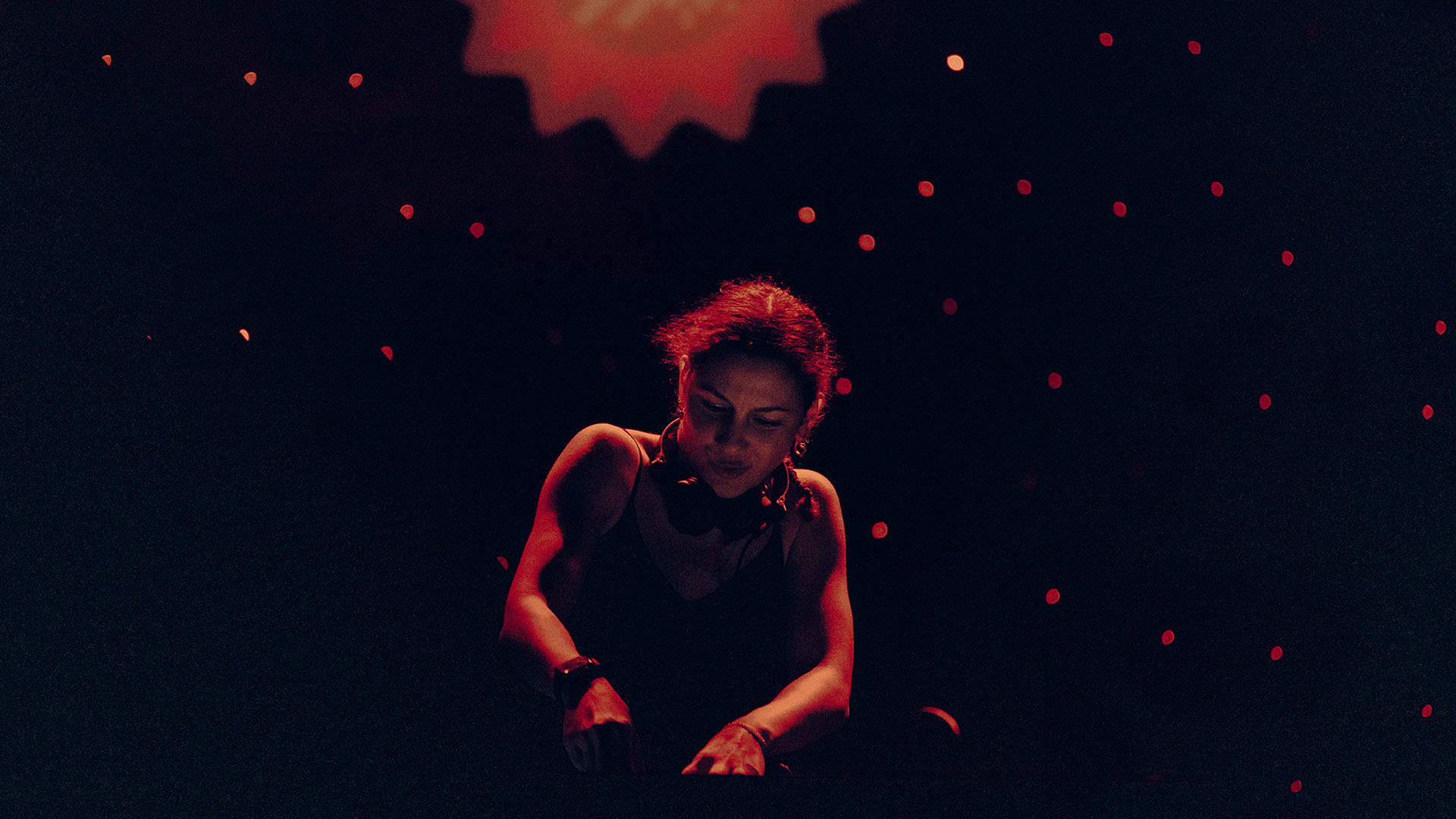
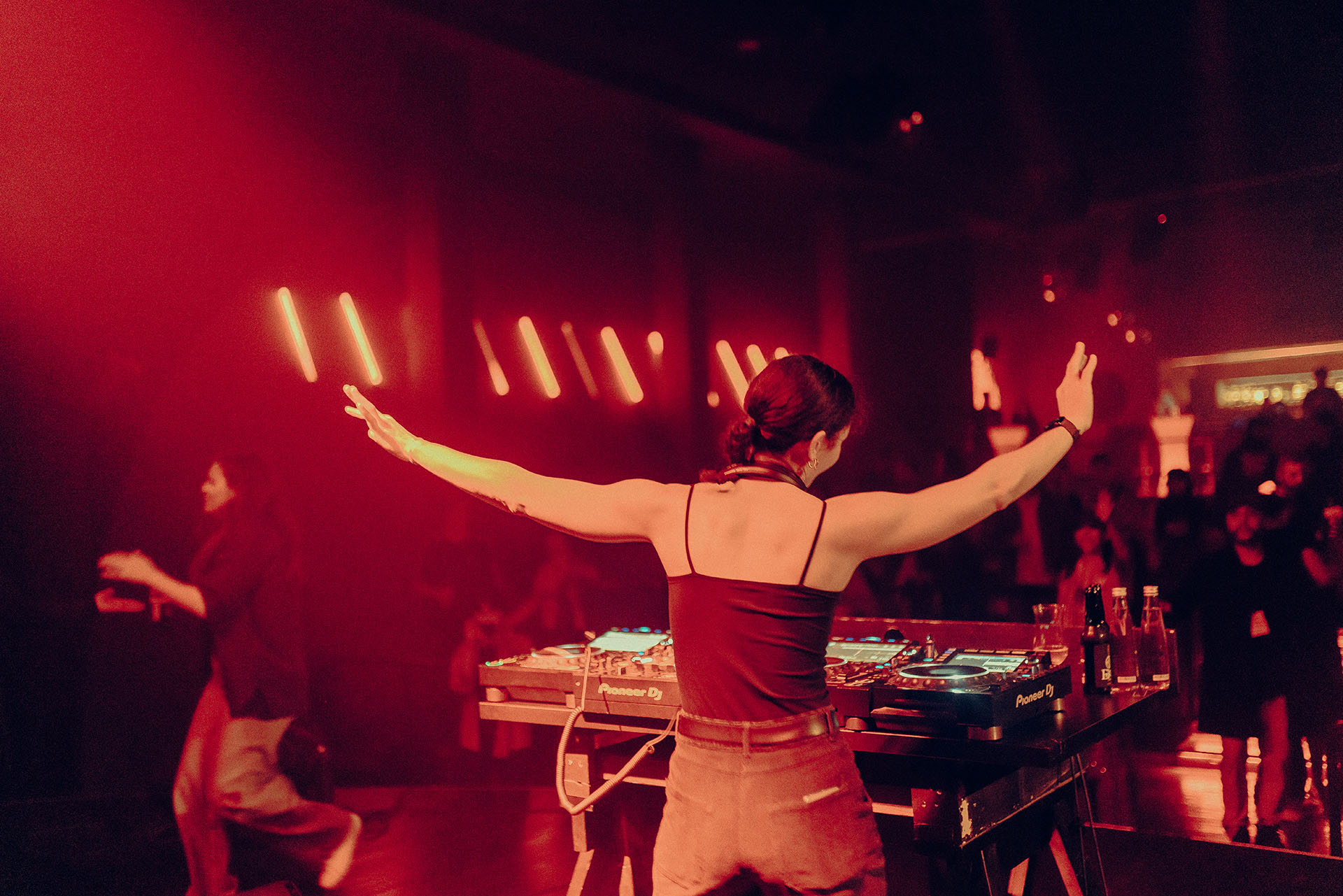
Deena’s performance generated one of the strongest audience reactions of the festival. The interaction was immediate, physical, and collective. As she performed, bodies in the crowd responded instinctively, moving along to the hypnotic rhythms impulsively without trying to define what they were hearing. This audience-artist interaction formed the starting point of our conversation with the Tunisian producer and DJ, whose work moves between electronic experimentation, Arab popular music, and political and cultural questions rooted in the region. In this interview, Deena speaks about Arab audiences, the centrality of feeling in her music, her relationship to popular forms, her engagement with politics and identity, and her growing desire to leave the album format behind in favor of live, evolving performance spaces.
Arab Audiences and the Meaning of the Beirut Moment
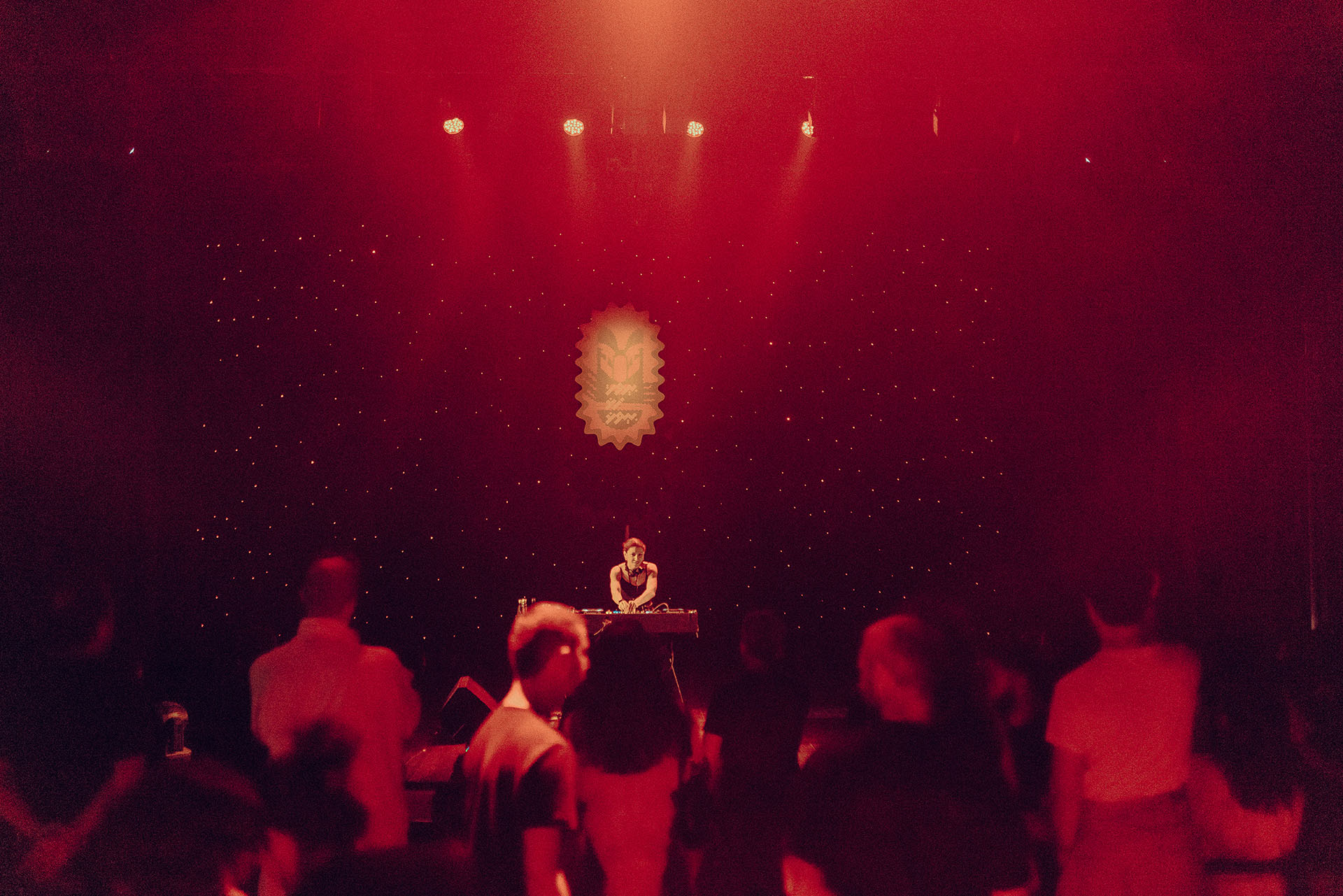
When asked about the strong interaction during her Beirut & Beyond International Festival concert, Deena immediately connected it to the way the festival itself was conceived. She said that even in Europe, most of her audience is Arab, and that Beirut & Beyond built its program around dialects, nationalities, and differences. According to her, the festival was designed as a “scenario” created by the programmers, where depth was as central as enjoyment. She explained that the idea during the two days she attended was to construct something that invited people into stories, layers, and experiences, while engaging their bodies. For Deena, this curatorial approach shaped the atmosphere of the night: the audience came ready to interact, and to receive the music as part of a wider collective moment. She described this balance between interaction and depth as one of the festival’s most beautiful aspects, and as a key element in how her relationship with Arab audiences takes form.
Feeling, Discovery, and the Desire to Move
This relation between the sensory and its comprehension, prompted the question of what mattered more: that her music be understood or felt? Deena answered directly: feeling comes first. She spoke about how people tend to respond more easily to music they already know, while unfamiliar sounds demand cognitive effort that often leads to rejection. Many listeners, she said, go out seeking atmosphere and enjoyment, without wanting to engage deeply with new sonic structures. She compared this to dominant attitudes toward museums and art, especially among older generations, where art is expected to be refined, beautiful, and simple, without complexity or mental engagement.
Deena linked this to her own experience growing up in Tunisia. In her late teens and early twenties, going out meant listening to music, laughing, drinking, and socializing, while alternative spaces emerged through young people who organized their own parties, rented sound systems, and brought unfamiliar music. These gatherings, she explained, were spaces of collective discovery, where people interacted, discussed, danced, and experienced music together. That period shaped her relationship to sound, along with her attraction to computers and machines. With the Arab revolutions in 2011, Facebook, and the spread of digital tools, she understood that her own musical exploration would pass through the computer. She also observed that after more than a decade, digital sound has become familiar to wider audiences, including in Arab pop music, where production today largely relies on electronic tools rather than orchestral studio recordings.
Spontaneity, Politics, and the Refusal of Fixed Forms
Throughout our interview, I asked Deena about her preference for popular and contemporary music over classical tarab or folkloric traditions, she focused on spontaneity. Popular music, she explained, offers openness, freedom, and the absence of fixed gatekeepers. For her, it grows directly from daily life and carries fewer structural constraints than academic music, which remains tied to established frameworks and rules. This freedom, however, also brought technical challenges, especially on her album “Jbal Rassas”. Thinking of the musical challenges she encountered during the production she pointed to Arabic maqams, melody, and composition, explaining that most music software is built around major and minor scales, making maqams and ornamentation difficult to integrate. These musical struggles intersect with broader political and cultural questions. When we asked This in turn prompted the question whether Deena considers herself a political artist, to which she energetically responded describing politics as imposed and central. She recalled growing up in Tunisia amid a widespread sense that Western culture held greater value and accessibility, reinforced by the dominance of French and English references in books, cinema, and music, alongside a lack of Arabic musical references. She also referred to a generation of young Tunisians who wanted to leave, while resisting the feeling of being forced to depart. Having had an opportunity to live in France for nearly ten years now honed her understanding around the issue revolving around self-confidence rather than technical ability. These concerns also shaped her involvement in “Flagranti”, the theatrical work that addressed LGBTQ realities in Tunisia. Delving deeper into her experience of shaping music for theatre, she said it held deep personal meaning. Saying: “I’ve known the director for a very long time. She is a close friend, and she is very experienced. Her parents are among the strongest figures in Arab theater”. Deena Abdelwahed went on to elucidate that: “In Tunisia, the LGBTQ+ community is criminalized, both legally and socially. I am part of this community, and I know many who work in and for Tunisia without revealing their identities publicly.” For her, the project created space to affirm the existence, work, and creativity of LGBTQ people.
Delving deeper, it becomes unavoidable to speak about identity. “I feel I don’t have a single Identity” Deena Abdelwahed exclaims. Could the form-breaking nature of her music carry a queer dimension? Deena comments on this question saying that her approach is connected to the diversity she lived and to a refusal of a singular identity. Citing Amin Maalouf, she explained that her identity is composed of many influences and recognitions rather than one fixed definition.
Toward the end of our conversation and contemplating next steps, Deena spoke about a growing shift in how she imagines her future work. Reflecting on both her seminal works “Khonnar” and “Jbal Rassas”, she described earlier phases marked by spontaneity and fear, alongside a desire today for deeper collaboration. She shared that she feels increasingly distant from the album cycle and more convinced that her place is on stage. Her current projects, ranging from multidisciplinary performances to the development of a digital qanun and long-form collaborative shows, point toward live spaces where music unfolds over time, changes form, and keeps the audience’s attention anchored to what is happening in the moment. For Deena Abdelwahed, the stage has become the space where sound, bodies, and meaning continue to converge.
— Pictures by Tamara Saadé