

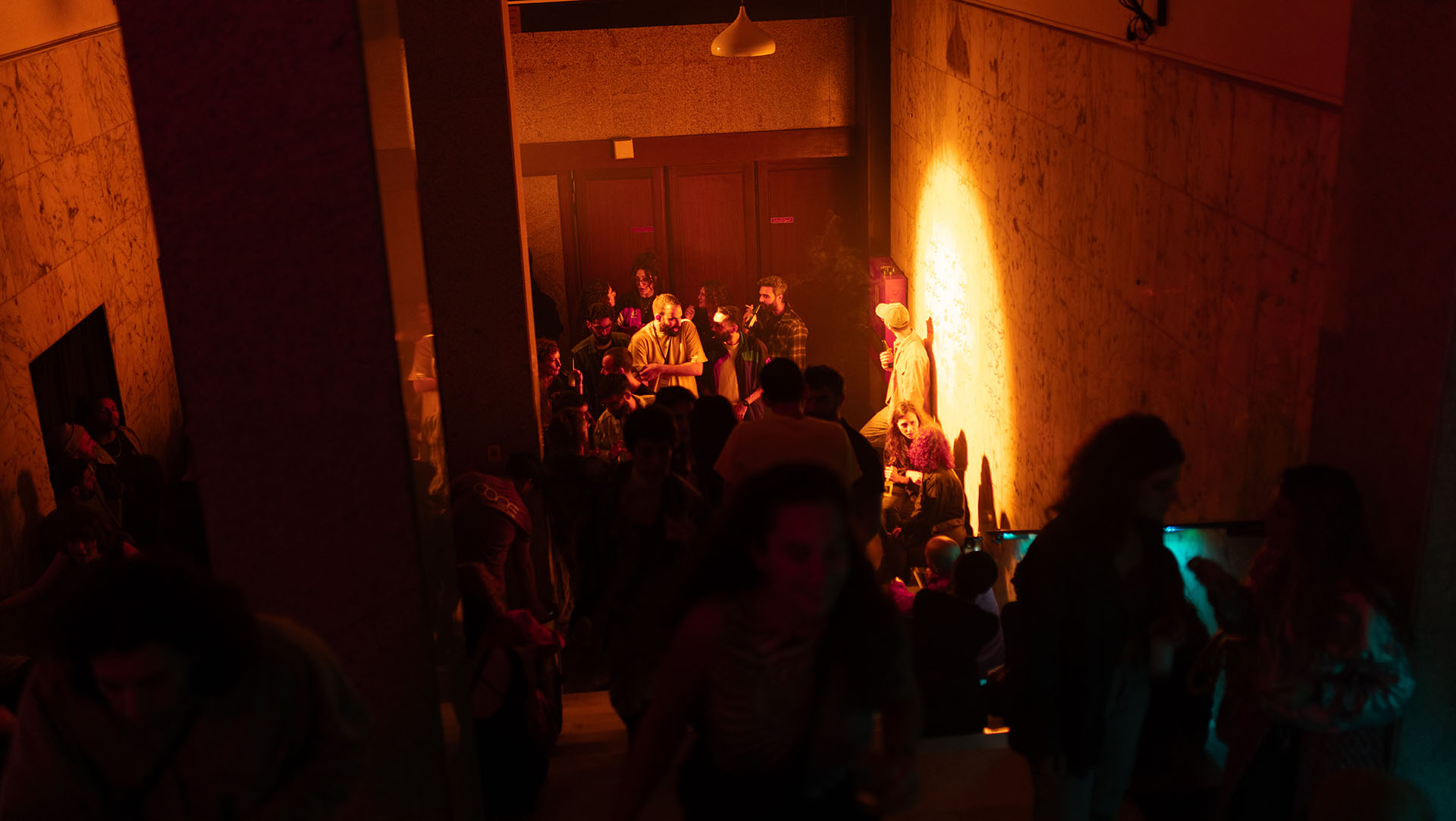
Metro Al Madina is one of those spaces artists inevitably pass through at some point in their journey. Sometimes it happens early, when their sound is still forming. Other times it comes later, once their voice has settled. Either way, performing at Metro carries a particular weight. The room listens closely. It remembers. Artists leave slightly changed, having tested their work inside a space that does not separate performance from people. It is not just a venue, but a passage point, a space that almost every artist crosses at some stage of their career. Playing at Metro is significant. It sharpens artists, exposes them to an attentive yet demanding audience, and places them within Beirut’s layered cultural memory. The venue has long offered a space where experimentation, dialogue, and intimacy coexist. As Metro grew into its new location, it became more open and more diverse, still a rite of passage, but one that now includes a wider circle of people.
Beirut shapes music as much as it hosts it. Artists move through the city carrying their sound with them, absorbing its contradictions as much as its openness. Some stay. Others pass through. Almost all leave influenced in one way or another. Beirut does not offer comfort or ease, but it offers friction, and that friction often finds its way into the music.
This year’s Beirut & Beyond festival unfolded within that context, despite immense challenges. The Beirut & Beyond team navigated visas, political instability, the ongoing genocide in Palestine, regional tension, and heavy logistical pressure to make the festival happen. Yet throughout the three days, what stood out was how grounded the team remained. They were present, available, kind, and visibly supportive of both artists and audiences. There was an ease in how they operated, always ready to help, always approachable, creating an atmosphere where stress never overpowered care. The collaboration between the Beirut & Beyond team and Metro Al Madina’s crew felt seamless. Both teams worked in quiet harmony, allowing the festival to unfold naturally, without friction or visible hierarchy.
The city itself played its part. Beirut offered what felt like the perfect weather for such a festival. Slightly cold, with occasional soft rain, winter settling gently over the streets. Winter feels symbolic of independent music. It carries rebellion, introspection, and the urge to change. It pulls people inward, closer to sound and closer to each other. The atmosphere intensified the emotional weight of the performances and the intimacy of the gathering.
Across the three days, the audience energy remained deeply inviting. The festival felt less like a public event and more like a large house gathering with music. People recognized each other easily, and newcomers quickly made conversations, connections, or shared drinks. Openness defined the crowd. People were generous with attention, time, and presence.
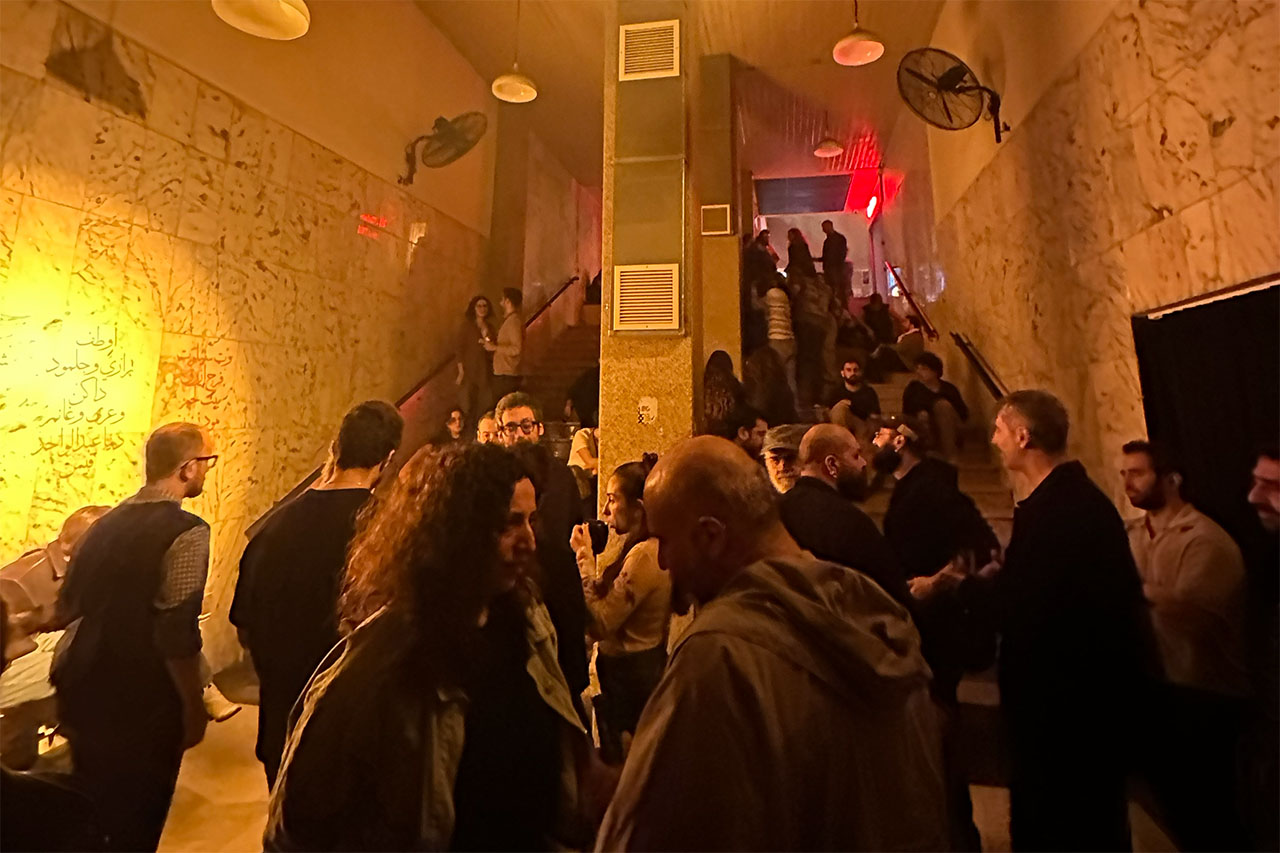
As much as I was there for the music, I kept finding myself watching the crowd. Dark and muted tones dominated the scene along with leather jackets, silver accessories, and layered outfits, while bright colors were rare. The aesthetic felt intentional, almost unspoken, like a shared visual language. Smoking was another common ritual. During every break, the Metro stairs filled completely, packed so tightly that navigating through them became a challenge. The stairs turned into a social artery, buzzing with conversations and reunions.
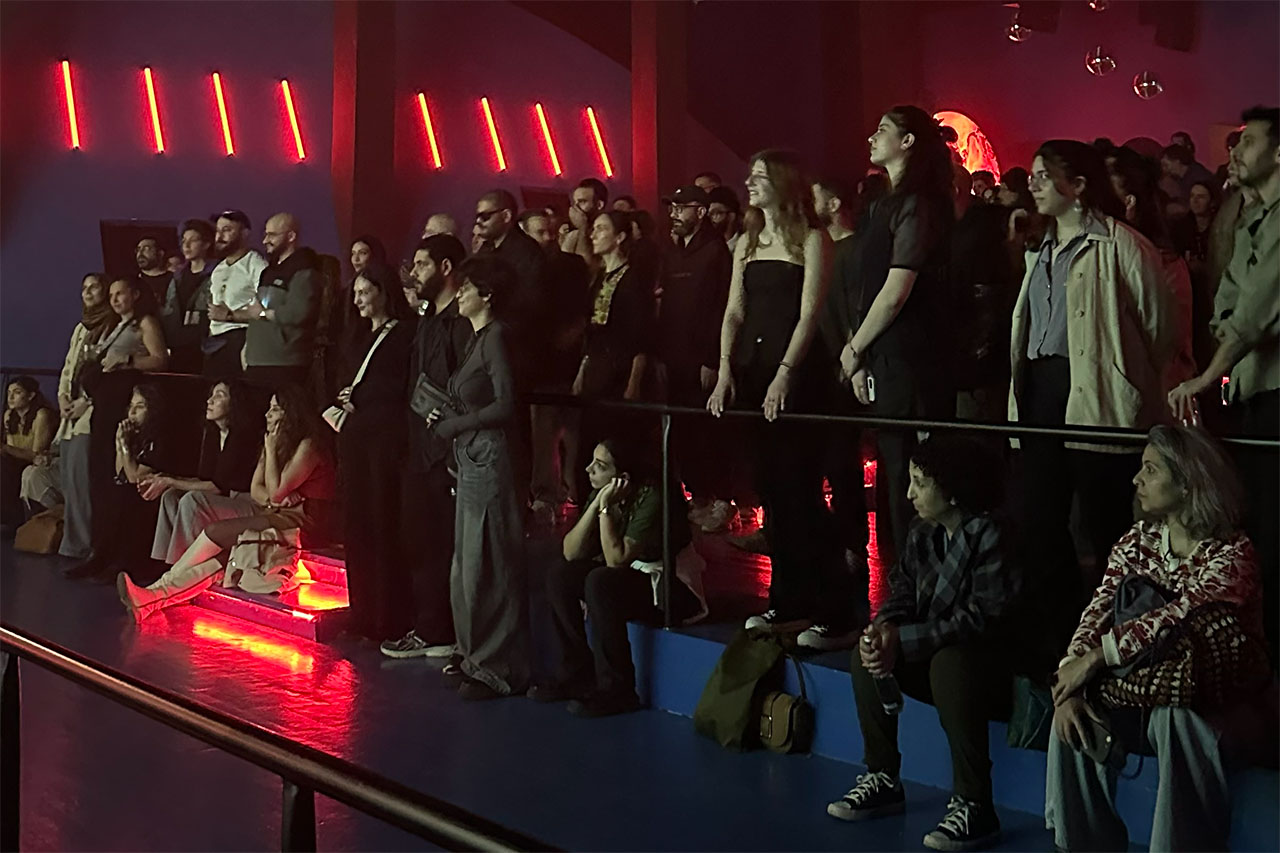
The first day was set with seated tables that gradually filled. The crowd was noticeably older than expected, mostly millennials and older adults. Gen Z presence was minimal, which reflected Beirut & Beyond’s particular pull. The lineup was diverse, and feedback circulated early in the night. Some felt the opening act started slower than anticipated.
Many attendees had clearly come specifically for Beit Lahm. Their performance was intense, immersive, and emotionally heavy. It shaped the rest of the night. Several people left Metro after their set, and one attendee commented that after Beit Lahm, it felt difficult to listen to anything else.
Seated attendees were focused, listening closely, and observing. Meanwhile, the bar crowd leaned into conversation, drinks, and atmosphere. The very few dancers that night were only at the bar, so rare that they could almost be counted on one hand.
The second day brought a noticeable shift. The lineup leaned more toward rap and lyric-driven music, which initially felt surprising. Music with lyrics usually attracts larger crowds because it is familiar and narrative-based. Yet in this context, something different happened.
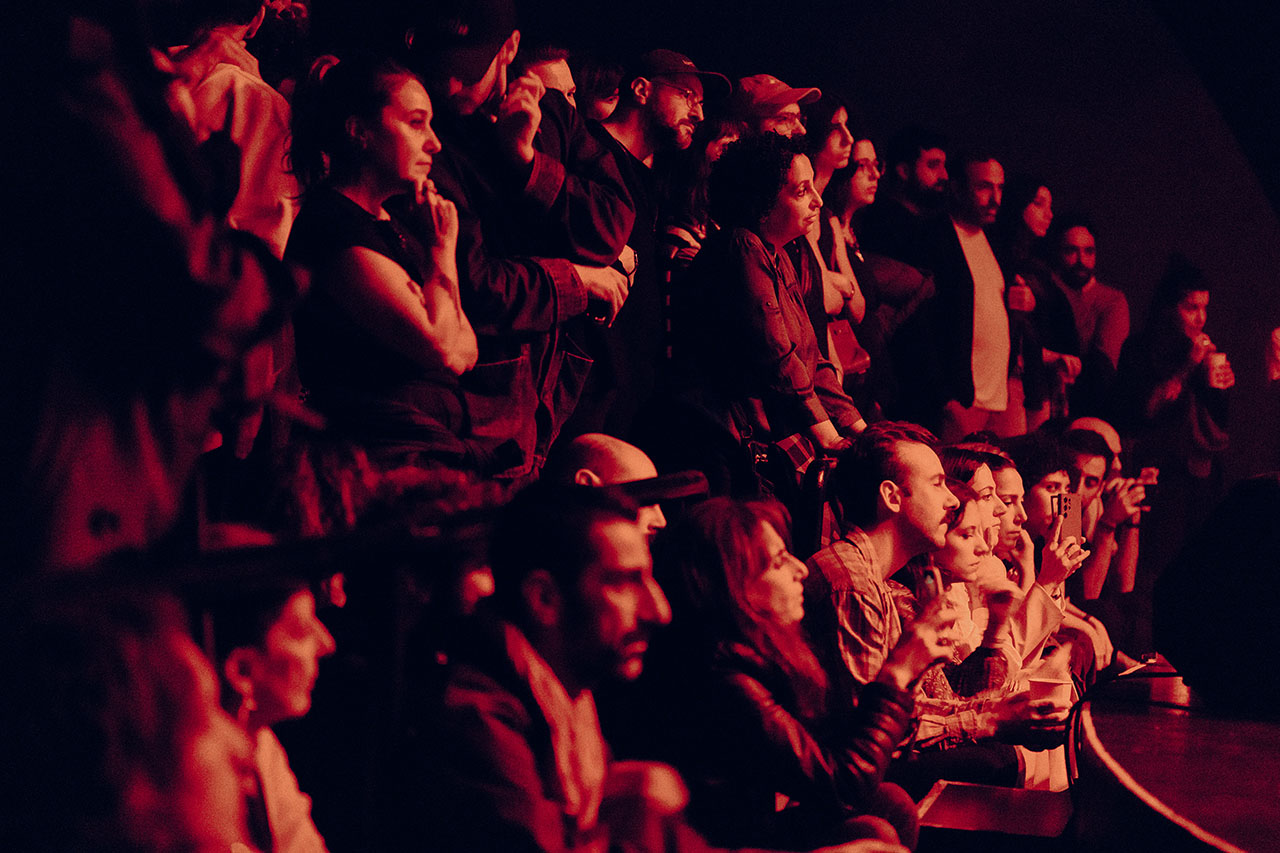
Metro Al Madina and Beirut & Beyond shape how people experience music. The audience came not only to listen, but to move, talk, dance, and connect. Lyrics require focus, language, and stillness. Sound allows openness. Concerts centered around lyrical and mainstream music are usually more crowded and fully booked than jazz or experimental performances, which tend to attract smaller but more attentive audiences.
The second night’s crowd was younger than the first, with more local attendees. There were many dancers. People nodded their heads in harmony with the beats, moving instinctively together. It was a reminder that music connects people regardless of language, nationality, or background. It became a shared rhythm, a collective pulse.
The closing night was the most crowded. Metro, the stairs, and the space outside were full. Conversations overlapped everywhere. Hugs, laughter, drinks, debates, music discussions. The energy was loud, social, and overflowing. What also stood out that night was the gender dynamic, as the crowd appeared noticeably more male-dominated compared to the previous days.
People arrived in larger groups than on previous nights. The crowd included both adults and younger generations, with even more national diversity. The size of the audience made control difficult. Conversations continued during performances, sometimes louder than the artists themselves. Some attendees grew frustrated and asked others to quiet down. Despite this tension, the night carried a celebratory weight. A sense of closure, abundance, and release. It was chaotic, but alive.
The festival also extended beyond the evening performances. Panels like Geographies of Sound and Funding Without Compromise took place across Beirut, bringing together artists and industry figures to discuss the realities of making independent music in the region. These sessions, alongside residency and development programs, placed the festival within something larger than three nights of live music.
What stayed with me most was the diversity, not as an idea, but as a lived reality. Different ages, backgrounds, languages, and rhythms coexisted in the same space. I found myself appreciating the sound of people’s voices echoing around Metro Al Madina just as much as the music itself. Conversations overlapping, laughter spilling onto the stairs, familiar faces greeting each other, strangers slowly becoming part of the room. This human noise felt grounding rather than disruptive. Seeing artists like Bu Kolthoum standing within the audience that night carried a quiet personal weight for me. It felt like witnessing the very idea the festival embodies, that music moves horizontally, dissolving the distance between stage and floor. It reminded me that music does not exist in isolation, but within people, stories, and shared moments.
Across the three days, music became a quiet teacher. It showed how unity does not require sameness, and how acceptance can exist without effort or explanation. Through sound, movement, and presence, people listened in their own ways. Some through stillness, others through conversation or dance. All equally valid.
Music creates closeness without asking for translation. It allows people to stand next to each other without needing to agree, understand, or even speak the same language. Listening took many forms. Stillness, movement, conversation, silence. None canceled the other out. Together, they formed a shared experience that felt honest, human, and momentary.
In Beirut, these moments matter. They surface briefly, then disappear, leaving behind traces in memory and sound. Beirut & Beyond at Metro Al Madina felt like one of those moments. Temporary, imperfect, and deeply alive.
— Pictures by Yasmin Naji.